Table of Contents
You probably used an IoT device today without even knowing it. Maybe you asked Alexa to play music. Checked your smartwatch during a morning run. Or walked into a store where tiny sensors were already counting how many people came in before you reached the door. That’s the Internet of Things at work, and it’s everywhere now.
So, what exactly is IoT, why does it matter, and how does it work? Let’s break it all down in simple, easy-to-understand words.
What Is the Internet of Things (IoT)?
The Internet of Things, which people usually just call IoT, is basically a large group of everyday objects that are connected to the internet and can share information with each other. These aren’t just computers or phones. We’re talking about things you use every day: home appliances, fitness watches, factory machines, farm sensors, cars, and even street lights.
What makes the Internet of Things devices different from regular devices is that it works on its own. These smart devices can gather data, send it online, and do something with it; all without you needing to touch anything.
Think of a smart thermostat that knows your daily routine, lowers the heat when you leave home, and warms things up before you get back. No app needed. No reminders. It just figures it out.
How Does IoT Actually Work?
IoT works in three simple steps:
1. Gathering Information
A small sensor inside a device picks up information from the world around it. A sensor on a farm checks if the soil is too dry. A fitness watch tracks your heartbeat. A factory machine checks if it’s shaking more than usual.
2. Sending the Information
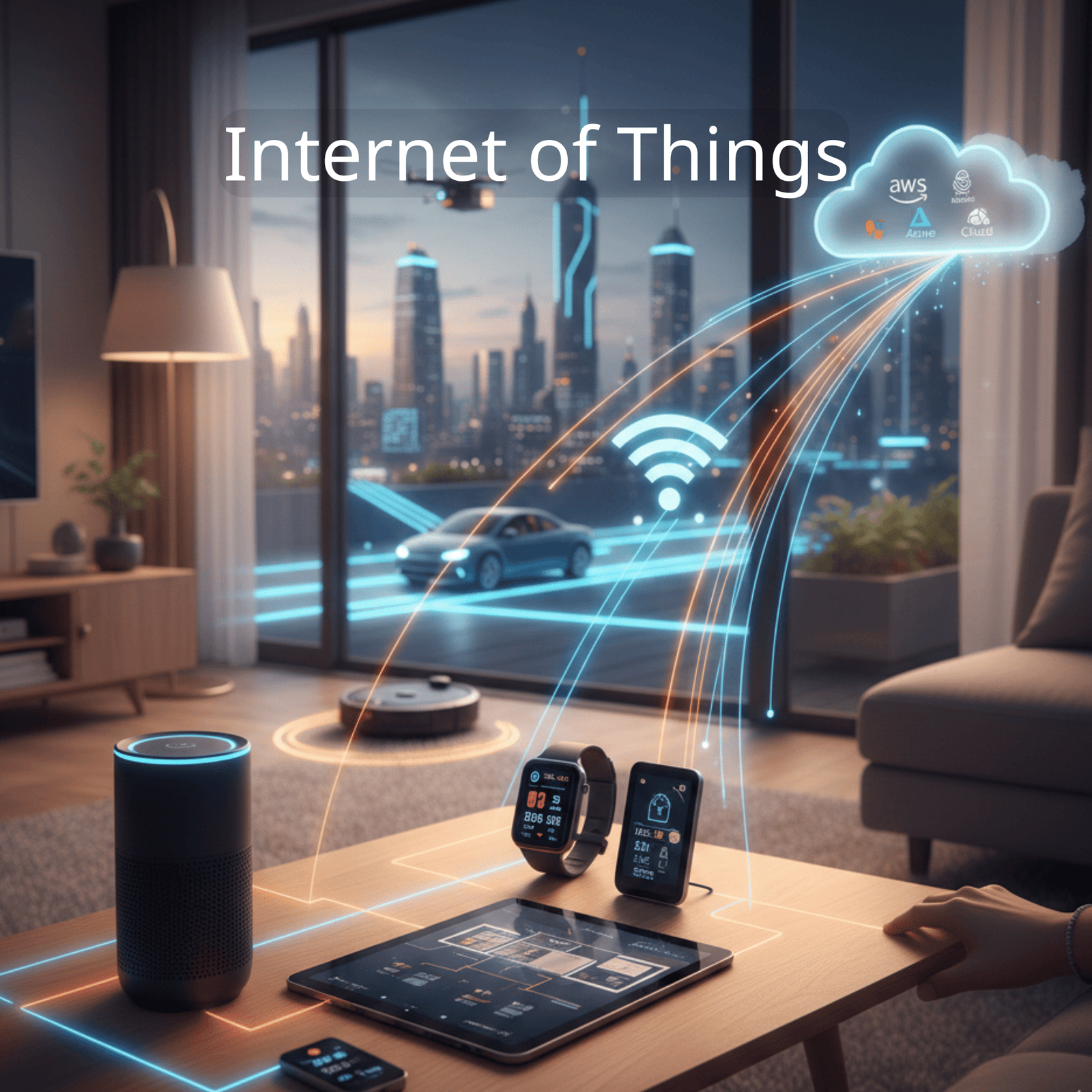
That information travels through the internet to an online storage system. Big tech companies like Amazon, Microsoft, and Google run these online systems that handle huge amounts of incoming data every second.
3. Taking Action
Based on what the system sees, something happens. A message gets sent to your phone. A machine turns off before it breaks down. A sprinkler turns on. The whole thing can happen in just a few seconds.
This is what makes Internet of Things devices different from normal gadgets. They don’t just collect information; they actually do something with it.
Real-World IoT Uses You Should Know About
IoT isn’t some far-off idea. It’s already working quietly in places you visit every day.
Smart Home Technology
Smart lights, smart door locks, video doorbells, and voice helpers like Amazon Echo and Google Nest are now very common. You can see who’s at your front door from another city or set your lights to turn off by themselves at night. Hence, your house becomes a smart home.
Healthcare IoT
Healthcare IoTs, such as wearable health devices like blood sugar monitors and smartwatches that check your heart, are changing the way doctors look after patients from a distance. Hospitals are also using connected sensors to keep track of their equipment and help patients faster during urgent situations.
Smart Farming
Farmers now use connected soil sensors, small flying cameras called drones, and live weather data to decide when to water their crops. This helps them grow more food, waste less water, and use their resources in a smarter way.
Connected Cars
Modern cars with IoT built in can send updates about the engine directly to carmakers, warn drivers about problems before they get serious, and even find the quickest route using live road information.
Smart Factories
Factories use connected sensors to spot machine problems before anything breaks down. This helps companies avoid expensive stops in work and saves a lot of money in the long run.
The Real Benefits of IoT Technology
The reason so many people and businesses are jumping on the Internet of Things comes down to one simple thing: it fixes real, everyday problems.
It saves time by handling tasks on its own, like turning off lights or ordering new office supplies when things run out. It saves money by cutting down on wasted energy and avoiding big repair bills. It keeps people safer through smart home alarms, alerts for older people who fall, and danger warnings in workplaces.
For businesses, the data that comes from the Internet of Things helps owners make smarter choices. Knowing how shoppers move through a store, how a machine is performing, or when a delivery truck goes off its usual path gives businesses a real edge over others.
IoT Challenges Worth Knowing About
No technology is perfect, and IoT has its fair share of problems, too.
Security risks are one of the biggest worries. Many connected devices come with easy-to-guess default settings or don’t get regular software updates, which makes them easy for hackers to break into. Back in 2016, a large attack used thousands of hacked IoT devices to shut down some of the biggest websites in the world, which showed just how real this danger is.
Privacy is another big topic. Smart speakers, home cameras, and fitness trackers collect very personal information about you. Laws in different countries are trying to make sure companies handle this data carefully, but it’s still important for users to know what their devices are collecting and who can see it.
There’s also the problem that not all devices work well together. A smart home product from one company might not connect smoothly with devices from a different brand, which can be really frustrating.
The Future of IoT: What’s Coming Next
We’re still just getting started. Experts believe there will be more than 30 billion connected IoT devices around the world by 2030. As faster mobile internet, known as 5G, keeps spreading, devices will be able to send and receive data much quicker, making things possible that just aren’t doable today.
AI is also being added directly into IoT devices so they can make faster, smarter choices on their own without needing to send everything to an online server first. This means devices will work better even when the internet is slow or cuts out.
Smart city projects around the world are already using IoT to control traffic lights, check air cleanliness, find water pipe leaks, and cut down on electricity use in public buildings. It’s all being built up slowly, one small sensor at a time.
Conclusion
The Internet of Things isn’t just a trendy tech word. It’s a big change in the way the real world and the online world work together. From farms to hospitals to factory floors, IoT is already making things faster, safer, and easier for everyone.
Learning about IoT now means you’ll be more ready to use it, question it, and make smart choices around it, whether you’re a regular user, a business owner, or someone building the next big connected product.
The devices are already talking to each other. It helps to know what they’re saying.