Table of Contents
The Internet of Things (IoT) has moved far beyond smart homes and wearable devices. By 2026, IoT is reshaping industries, redefining business operations, and enabling real-time decision-making at an unprecedented scale. From manufacturing and healthcare to retail and smart cities, IoT has become a critical driver of efficiency, automation, and innovation.
This blog explores what IoT is, how it works, why it matters in 2026, key trends, business benefits, challenges, and best practices for successful adoption.
What Is the Internet of Things (IoT)?
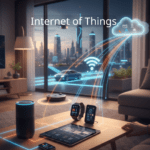
The Internet of Things (IoT) refers to a network of physical devices embedded with sensors, software, and connectivity that allows them to collect, exchange, and analyze data over the internet.
These devices communicate with each other and with centralized systems, enabling organizations to monitor conditions, automate processes, and make data-driven decisions in real time.
Why IoT Is More Important Than Ever in 2026
Several factors are accelerating IoT adoption in 2026:
- Growth of cloud computing and edge computing
- Advancements in 5G connectivity
- Increased demand for real-time analytics
- Need for automation and operational efficiency
- Rising focus on predictive maintenance and cost optimization
Businesses that leverage Internet of Things effectively gain deeper visibility into operations and a strong competitive advantage.
How IoT Works: A Simple Breakdown
Sensors and Devices
Internet of Things begins with sensors that collect data such as temperature, location, pressure, motion, or usage patterns.
Connectivity
Collected data is transmitted through networks like Wi-Fi, cellular, LPWAN, or 5G to cloud or edge platforms.
Data Processing and Analytics
Data is processed using analytics platforms, AI models, or machine learning algorithms to generate insights.
Action and Automation
Based on insights, systems trigger alerts, automate actions, or support human decision-making.
Key IoT Trends Shaping 2026
Edge Computing and IoT
Instead of sending all data to the cloud, processing happens closer to the device. This reduces latency, improves performance, and supports real-time decision-making.
AI-Powered IoT
AI and machine learning enhance Internet of Things by enabling predictive maintenance, anomaly detection, and intelligent automation.
Industrial IoT (IIoT) Growth
Manufacturing, energy, and logistics industries are using IoT to monitor equipment, optimize supply chains, and reduce downtime.
Smart Cities and Infrastructure
Internet of Things supports traffic management, energy optimization, waste management, and public safety initiatives in smart cities.
Stronger Focus on IoT Security
With the increase in connected devices, security and data protection have become top priorities for IoT deployments.
Business Benefits of IoT
IoT delivers measurable value across industries:
- Real-time monitoring and visibility
- Improved operational efficiency
- Predictive maintenance and reduced downtime
- Better customer experiences
- Cost savings through automation
- Data-driven strategic planning
These benefits allow businesses to operate smarter, faster, and more efficiently.
IoT Use Cases Across Industries
Manufacturing
IoT enables equipment monitoring, quality control, predictive maintenance, and production optimization.
Healthcare
Connected medical devices support remote patient monitoring, real-time health tracking, and improved patient outcomes.
Retail
IoT helps track inventory, analyze customer behavior, and personalize in-store experiences.
Transportation and Logistics
Fleet tracking, route optimization, and real-time shipment monitoring improve delivery efficiency and reduce costs.
Smart Homes and Buildings
Energy management, security systems, and automation enhance comfort and sustainability.
IoT Security Challenges Businesses Must Address
Despite its benefits, IoT introduces security risks:
- Large attack surface due to multiple devices
- Weak authentication and device misconfigurations
- Lack of standardized security protocols
- Data privacy concerns
Without proper security controls, IoT environments can become easy targets for cyber threats.
Best Practices for Secure IoT Implementation
To ensure safe and scalable IoT adoption, businesses should:
- Use strong device authentication and identity management
- Encrypt data in transit and at rest
- Monitor IoT networks continuously
- Apply regular firmware updates
- Integrate IoT security with cloud security strategies
Security-by-design is essential for long-term IoT success.
The Future of IoT Beyond 2026
IoT will continue evolving with deeper integration into AI, cloud platforms, and cybersecurity frameworks. Businesses will increasingly rely on IoT data for automation, optimization, and innovation.
Organizations that invest in scalable, secure IoT architectures today will be better prepared for future digital transformation.
Conclusion
The Internet of Things is no longer optional it is a strategic necessity in 2026. By connecting devices, collecting real-time data, and enabling intelligent automation, IoT empowers businesses to operate more efficiently and competitively.
With the right strategy, security approach, and technology stack, IoT can unlock long-term growth and innovation across industries.